User-generated content, usually shortened to UGC, has become one of the most reliable creative formats for social ads. A real person talking to camera about a product feels closer to a friend's recommendation than a polished commercial does. That is why it often performs well on Instagram, Facebook and YouTube Shorts.
But plenty of brands commission UGC and end up with videos they cannot use: too long, off-message, badly lit, or missing the one thing that makes the product worth buying. Almost always, the problem started with the brief.
Here is how to write one that gets you content that works.
Start with the job the video has to do
Before you describe the product, describe the purpose. A creator needs to know whether the video is meant to:
- Introduce the product to people who have never heard of it
- Answer a specific doubt, such as "Does it really work on oily skin?"
- Show the product being used, step by step
- Compare it to the way people solve the problem today
- Push people who already know you to buy now
Each of these produces a different video. Choose one per brief. You can commission several videos with different jobs, but each individual video should do one thing well.
Tell them who they're talking to
A good creator adjusts naturally to their audience, but only if you tell them who it is. Describe the viewer in a sentence or two: "Working women in their late twenties in metro cities who want a quick skincare routine and are sceptical of big claims." That is far more useful than "women 25 to 35".
Include what the viewer already believes and what stops them buying. The best UGC speaks directly to that hesitation.
The first three seconds decide everything
People scroll fast. The opening line or moment must stop them. Give creators two or three hook ideas, while making clear they can improvise:
- A bold, relatable statement: "I was spending ₹2,000 a month on face wash and still breaking out."
- A visual surprise: the product doing something unexpected on camera.
- A direct question: "Do your earphones die halfway through your commute?"
- A result shown first, with the explanation after.
Ask for at least two or three different openings on the same video. Testing different hooks on the same body is one of the cheapest ways to find a winning ad.
One key message, and proof of it
Pick the single most important thing the viewer should remember. Not five features, one message. Then list two or three supporting points the creator can draw on if they fit naturally.
Ask for proof on camera wherever possible. Show the texture, the before and after, the battery indicator, the actual size in a hand. Showing is more convincing than telling, and it makes the video useful even with the sound off.
Give guidance, not a script
The value of UGC is that it sounds like a real person. A word-for-word script usually destroys that. Instead, give:
- The key message and supporting points
- Phrases or claims they must not use, especially medical or exaggerated claims
- Your brand's tone in a few words, such as "warm, honest, a little playful"
- Two or three reference videos that capture the feel you want
Then trust them. Creators know their own style, and that style is what makes their content work.
Practical requirements
These details seem minor, but they decide whether a video is usable:
- Format: vertical 9:16, recorded in good resolution
- Length: usually 15 to 45 seconds for ads; ask for a longer cut too if useful
- Safe zones: keep faces and key text away from the top and bottom edges, where app buttons and captions sit
- Sound: a quiet room, clear voice, no copyrighted music in the background
- Light: natural daylight facing the creator works better than a dim room
- Raw files: ask for the unedited clips as well as the final edit, so your team can recut
Usage rights and disclosure, in writing
This is the part brands forget until it is too late. Agree in writing:
- Where you can use the video: organic posts only, or paid ads too
- For how long: for example, three months, six months or a year
- Whether you can run it from their handle: Meta's partnership ads let you promote content from the creator's account, which often performs well but needs their permission
- Whether you can edit it, and into how many versions
- Payment terms and timelines, including how many rounds of changes are included
In India, the Advertising Standards Council of India has guidelines for influencer advertising that require clear disclosure when content is paid or sponsored. Make sure every brief reminds creators to label paid content properly, and that any claims they make about the product can be substantiated. Honest disclosure protects both of you.
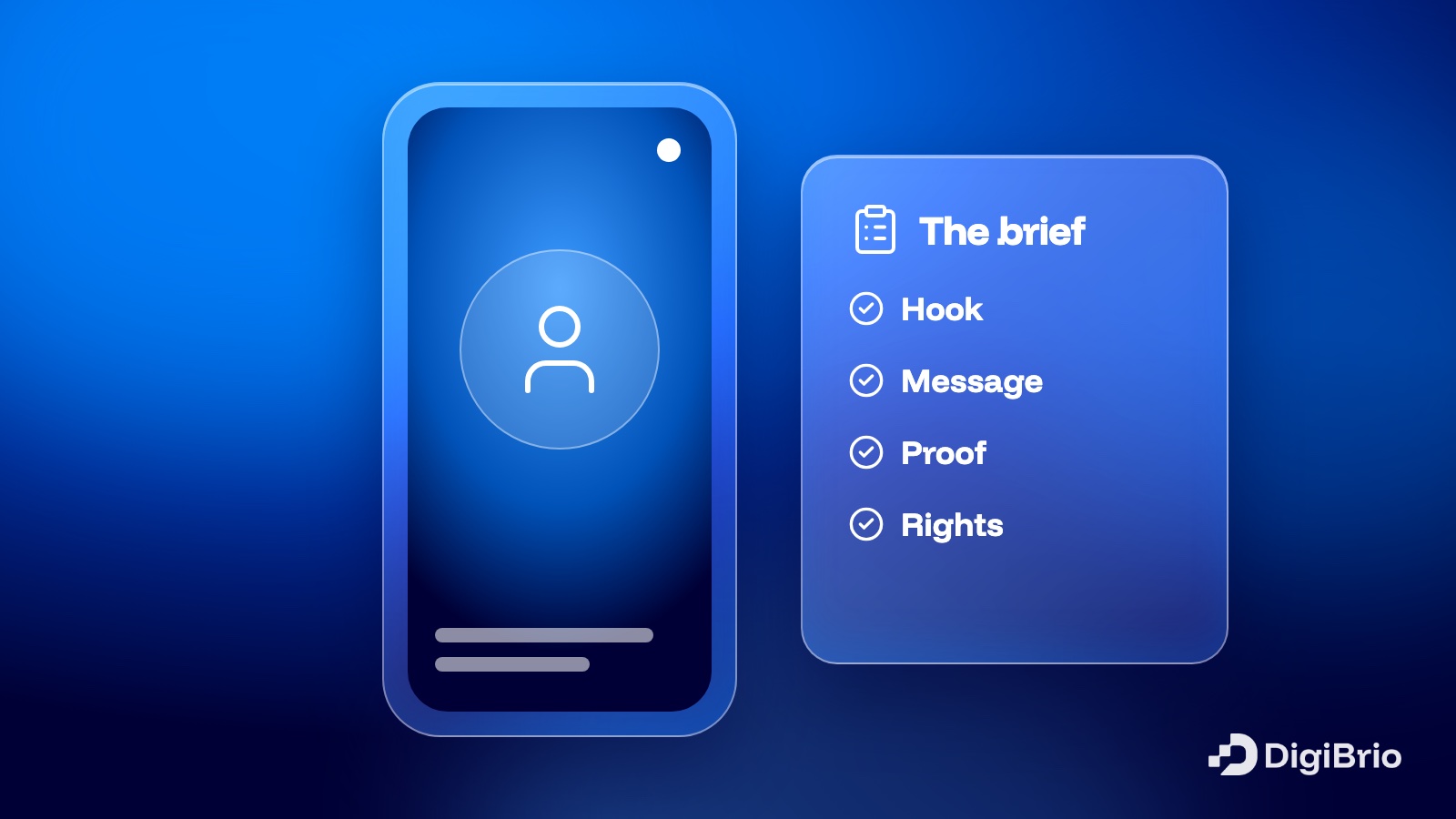
A brief template you can copy
- Product and link: what it is, with key details
- The job of this video: one sentence
- The viewer: who they are, what they believe, what stops them buying
- Key message: one sentence
- Supporting points: two or three
- Hook ideas: two or three, with freedom to improvise
- Must show: specific visual proof
- Must avoid: claims, words, competitor mentions
- Tone and references: a few words, plus two or three example videos
- Deliverables: length, format, number of hooks, raw files
- Rights and disclosure: usage, duration, partnership ads, labelling
- Deadline and payment: dates, terms, revision rounds
Judge the videos on results, not taste
Once the videos arrive, resist the urge to pick favourites in a meeting. Run them as ads and let the numbers decide: how many people watch past the first few seconds, how many click, and most importantly how many buy. The video the team loves least is sometimes the one that sells best.
The bottom line
A great UGC brief is short, specific and respectful of the creator's voice. It explains the goal, the viewer, the hook and the one message that matters, and it sorts out the rights before anyone records. Do that, and the content you receive will be ready to test, ready to scale and far more likely to perform.